
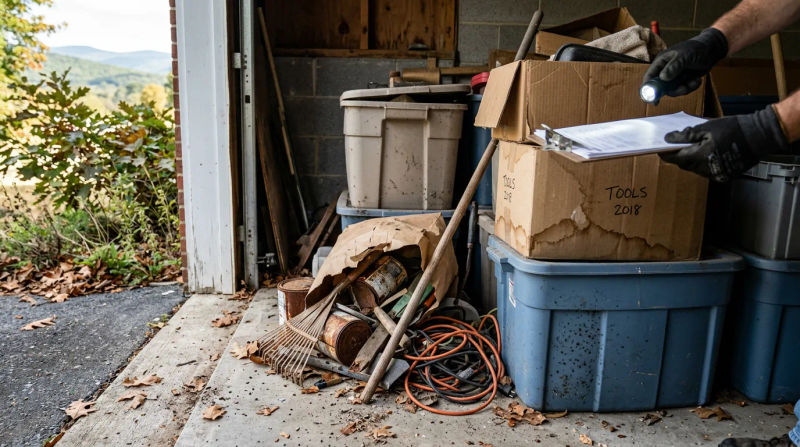
Hi, I’m Derek Lavoie. With over eight years of experience helping folks with cleanouts, I’ve seen it all. Around this time of year in Waynesboro, as the September air starts to cool, I get a lot of similar calls. It often starts like this: you go into the garage to put away the lawnmower for the season, but you can’t get to its spot. You have to shuffle past old boxes, a broken patio chair, and bags of stuff you meant to donate last spring. That simple task suddenly feels like a major project, and you realize your storage space has become a storage problem.
That pre-frost shuffle, when we swap our summer gear for fall and winter items, is often the moment of truth. It shines a light on clutter that has been slowly building for months, or even years. If this scenario sounds familiar, you’re not alone. Let’s walk through some of the most common cleanout warning signs my team and I see, and what they mean for your home’s safety and usability.
Common Signs and Symptoms
Recognizing that you have a problem is the first step. Often, we get so used to the clutter that we stop seeing it until it actively prevents us from doing something. Here are seven signs that it’s time to consider a cleanout before winter sets in.
- You’ve Created Narrow “Goat Paths.” Take an honest look at your garage, basement, or attic. Are the walkways wide and clear, or have you created single-file paths that you have to squeeze through? These are significant blocked garage walkway hazards. A trip or fall is much more likely when you can’t walk freely, especially if you’re carrying something. If you have to turn sideways to get through a space, it’s a major red flag.
- Your Car Hasn’t Seen the Inside of the Garage in Years. Many homes in Waynesboro, especially the classic 1950s Ranch-style houses, were built with attached garages designed for vehicles. Over time, these spaces have become the default storage unit for the entire home. If your car is sitting in the driveway facing rain, snow, and frost while your garage is filled with non-essentials, it’s a clear sign that your priorities for that space have been overwhelmed by clutter.
- The Seasonal Swap Is Impossible. You can’t put the patio furniture away because there’s no room. You can’t find the holiday decorations. Trying to access stored items becomes a frustrating, time-consuming excavation project. Your storage areas should serve you, not the other way around. When they become a source of stress, it’s time for a reset.
- You’re Storing “Mystery Boxes.” These are the cardboard boxes you packed during your last move, or the ones you inherited from a relative, that have remained sealed for years. You might not even remember what’s inside. While they may contain treasures, they are more likely holding onto items you no longer need, all while taking up prime real estate in your home.
- You Feel Anxious or Overwhelmed by a Space. Do you avoid going into your basement? Does the thought of opening the attic door fill you with a sense of dread? Our homes should be places of comfort, not stress. When a part of your home becomes a no-go zone because of the sheer volume of stuff, it’s negatively impacting your well-being.
- You’ve Noticed Unwelcome Guests (Pests). Clutter provides the perfect hiding spot and nesting material for rodents, spiders, and other pests. As temperatures drop in the fall, these critters are actively looking for warm, sheltered places to spend the winter. Piles of cardboard, old furniture, and forgotten bags are an open invitation.
- You Can’t Find Things When You Need Them. You know you own a specific tool, a particular document, or a piece of sporting equipment, but you spend 30 minutes searching for it to no avail. Disorganization costs you time and adds unnecessary frustration to your day.
What Causes This Problem
No one plans to fill their home with junk. It’s a slow, gradual process that happens for a few common reasons. Understanding the cause can help you prevent it from happening again after a cleanout.
- Slow and Steady Accumulation: This is the most common cause. An old appliance gets moved to the garage “for now.” Kids’ outgrown toys get tossed in the basement. We buy new things without getting rid of the old ones. Over a decade, these small decisions add up to a big problem.
- Life Transitions: Major life events are a huge contributor. This can include downsizing, combining households, clearing out a loved one's estate, or even children growing up and leaving behind years of their belongings. These events often bring a large volume of items into the home at once, and it’s easy to get overwhelmed.
- The “Out of Sight, Out of Mind” Mentality: Homes in our area often have spacious basements and garages. The 1950s-era homes that define many Waynesboro neighborhoods were built with this utility space. While fantastic for storage, they also make it easy to hide clutter. If you don’t see it every day, it’s easy to forget about it and let it pile up.
- Uncertainty About Disposal: Many people hold onto things simply because they don’t know how to get rid of them. “Can this old TV be thrown in the trash?” “Where can I donate this couch?” “What do I do with this half-empty can of paint?” This uncertainty leads to inaction, and the items stay put.
When to Call a Professional
Once you’ve identified the problem, the next question is whether you can tackle it yourself or if you need to bring in help. Deciding when to schedule a home cleanout with a professional often comes down to a few key factors.
Consider a DIY approach if the scope is small - perhaps a few bags of clothes or one or two pieces of small furniture. If you have the physical ability, the time, and a vehicle to transport the items to a donation center or the local dump, a weekend project might be all you need.
However, you should seriously consider calling experienced professionals when you encounter these situations. Think of this as a Waynesboro clutter safety checklist:
- The Scale is Overwhelming: If looking at the space makes you feel defeated before you even start, that’s a sign the job is too big for one person. A professional team can clear in hours what might take you weeks or months.
- There Are Safety Hazards: This is a big one. If the job involves very heavy items (pianos, old freezers, sleeper sofas), navigating treacherous paths, or dealing with potential hazards like mold, mildew, or signs of a pest infestation, it's safer to let experts with the right equipment and protective gear handle it.
- You’re on a Deadline: Are you trying to clear a space before the holidays, before putting your house on the market, or simply before the first snowfall makes everything more difficult? Professionals work efficiently to meet your deadline.
- You Lack the Right Equipment or Vehicle: Most people don’t own a truck large enough for a full cleanout. A professional service arrives with the vehicle, dollies, straps, and manpower to get the job done right in one trip.
- You Want to Ensure Responsible Disposal: A qualified junk removal team knows exactly where to take different materials. They will sort items for donation, recycling, and proper disposal, ensuring that as little as possible ends up in a landfill. This takes the guesswork and moral burden off your shoulders.
Conclusion
That feeling of being unable to use your own space is a clear signal that it’s time for a change. By recognizing the cleanout warning signs - from blocked garage walkway hazards to the simple stress of a cluttered basement - you can reclaim your home. Don’t let another season go by where your garage is unusable or your basement is a source of anxiety. Addressing the problem now, before the cold weather truly sets in, will make the process easier and set you up for a more organized and enjoyable winter.
If you notice any of these signs in your home, contact a local Junk Removal professional for an inspection. They can provide an expert opinion and help you create a plan to get your space back.